Home › Asphalt Sealcoating & Crack Filling
Protect your investment with asphalt sealcoating in Richmond, VA. Our crew cleans the surface, fills cracks, and applies a rich, even coat of sealer to shield against water, sun, and chemicals. Routine sealcoating keeps your driveway looking fresh and helps prevent costly repairs by sealing out moisture and slowing oxidation.
Precision Asphalt Richmond provides professional asphalt sealcoating throughout Richmond, VA, Virginia and the surrounding area. Our licensed, insured crew delivers safe, clean, on-time work with a free estimate before anything begins. Call (804) 409-4124 or request your free quote.
Asphalt Sealcoating in Richmond, VA, Done the Right Way
If you live or work in the Richmond area, you know what our summers and winters do to asphalt. Hot, humid days, surprise cold snaps, and plenty of rain all push water and UV rays into your driveway or parking lot. At Precision Asphalt Richmond, our asphalt sealcoating and crack filling service is built specifically around what Central Virginia pavement goes through every year.
Sealcoating is not just a “black paint” that makes things look nice. It is a protective coating that slows oxidation, blocks UV light, and keeps water, oil, and road salt from soaking into the surface. When it is combined with proper crack filling, it can easily double the life of a well‑built asphalt surface in Richmond.
Most of our local calls come from homeowners with a 3 to 15 year old driveway that is turning gray, starting to ravel (tiny stones coming loose), or showing several thin cracks. For commercial clients, the first sign is often fading parking lines and shallow cracks where customers walk. In both cases, the goal is the same: stop water from getting into the base before it freezes, expands, and breaks the pavement apart.
Precision Asphalt Richmond focuses on surface preparation as much as on the coating itself. We spend a good portion of each job cleaning, routing, and drying the pavement so the sealer actually bonds instead of just sitting on top. That prep work is why our sealcoating holds up through the heavy summer storms and winter freeze-thaw cycles Richmond sees every year.
Our Step‑by‑Step Sealcoating & Crack Filling Process
A long‑lasting sealcoating job in Richmond starts with a structured process. Here is how Precision Asphalt Richmond typically completes a residential driveway or small commercial lot.
1. Inspection and moisture check. We walk the entire area, mark out problem spots, and look for drainage issues or soft areas in the asphalt. On humid Richmond days, we check that the pavement is fully dry before we do anything else, because trapped moisture can cause blistering later.
2. Deep cleaning. We use steel bristle brooms and power blowers to remove dust, leaves, and loose stone. Oil spots are treated with a degreaser and scrubbed until the residue is gone. In shaded or older areas, we remove moss or algae so the sealer bonds to clean asphalt, not organic growth.
3. Crack preparation. For cracks that are wide enough, we use a crack router or a V‑shaped wand to open the top edges slightly. This gives the hot rubber crack filler a clean, uniform channel to lock into. Hairline cracks that are too tight for hot rubber are usually treated with a different, more fluid material that can seep into the gap.
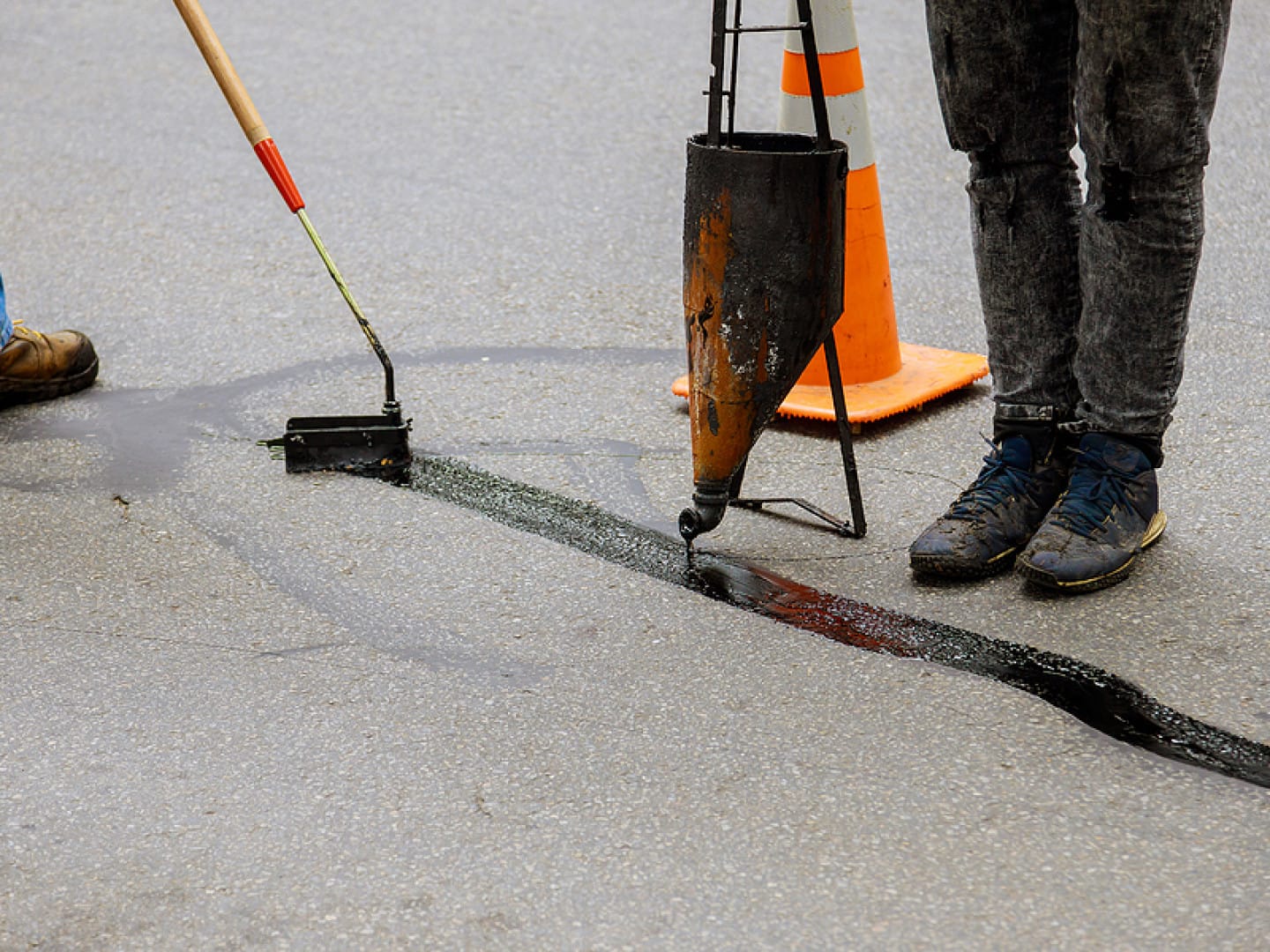
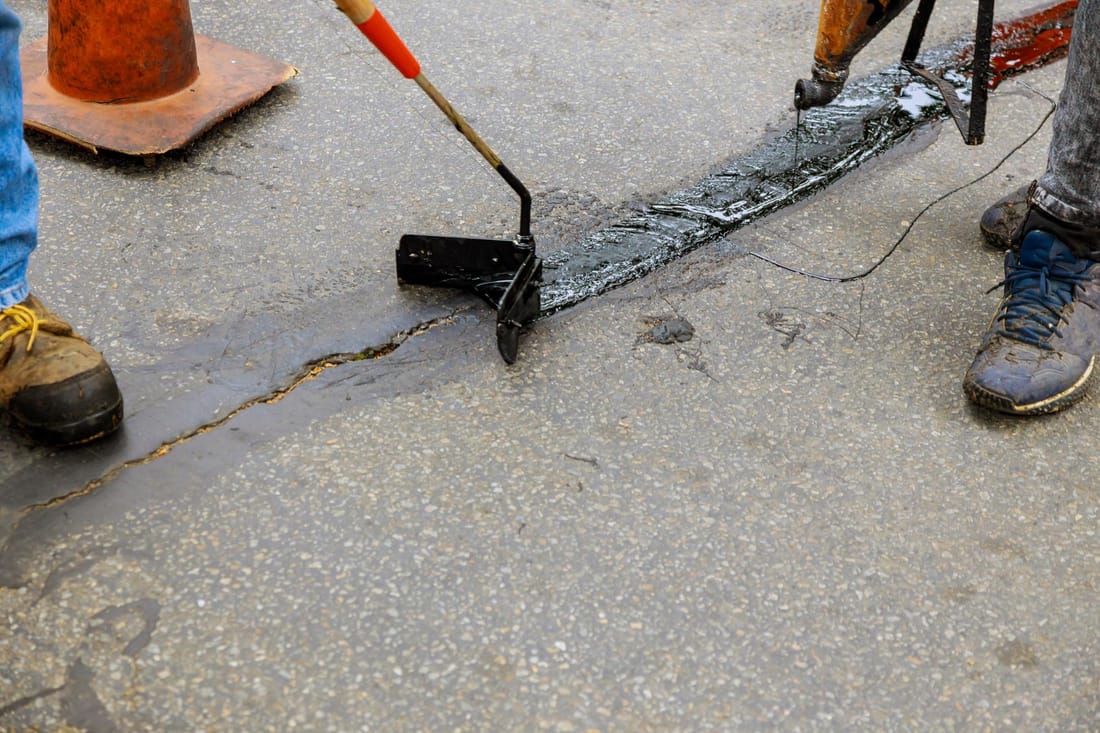
4. Hot rubber crack filling. For active cracks, we heat specialized rubberized crack sealant in a direct‑fire or oil‑jacketed kettle to the manufacturer’s recommended temperature (usually around 350–390°F). The material is then poured or applied with a wand and slightly overfilled, then squeegeed flat so it bonds to both sides of the crack and sits just below the surface once cooled.
5. Edge and obstacle protection. Before we spray or squeegee the sealer, we carefully tape or shield concrete aprons, building edges, garage doors, and any decorative stone or brick. At residential homes in Richmond, this often includes mailbox posts and walkways that meet the driveway.
6. Sealcoat application. We typically use a coal tar or asphalt emulsion sealer mixed according to manufacturer specs, often with sand and latex additives for extra durability and traction. Smaller driveways are usually hand‑squeegeed for a thicker, more controlled coat. Larger residential and commercial lots are sprayed in two thin coats, applied perpendicular to each other to avoid streaking and to ensure even coverage.
7. Drying, curing, and striping. Most Richmond driveways are safe for light foot traffic in a few hours and vehicle traffic after 24 to 48 hours, depending on humidity and temperature. For commercial properties, we usually return the next day to repaint parking lines, arrows, and ADA markings so the lot is ready for customers.
Material Options and What Affects the Cost
Every asphalt surface in Richmond is a little different, so we do not use a one‑material‑fits‑all approach. At Precision Asphalt Richmond, we match the sealer and crack filler to how the pavement is used and what it is already showing.
For most driveways and light‑duty parking lots, we use an asphalt emulsion sealer with sand and polymer additives. This gives good flexibility and a deep black finish without a strong odor. In high‑traffic commercial areas or spots where there is regular fuel drippage, like gas stations and loading zones, coal tar sealer still performs best against oils and chemicals. We always explain the pros, cons, and smell/curing differences, then let you decide what fits your property.
Crack filler selection also matters. Active structural cracks that open and close with Richmond’s temperature swings need a hot‑applied, rubberized crack sealant that can flex without breaking. Smaller surface cracks or “alligator” areas may be better handled with a cold‑pour crack filler or a patching compound, followed by sealcoating. We never recommend pouring sealer directly into large cracks, because it simply shrinks and pulls away.
Several factors influence the cost of asphalt sealcoating and crack filling:
• Square footage and layout. A straight, open driveway is faster and less expensive per square foot than a winding drive with tight corners, islands, or multiple offshoots.
• Crack density and severity. A driveway with a few long cracks costs less to treat than one with widespread alligator cracking that requires routing, hot rubber, and patching.
• Edge and obstacle detail. More handwork around fences, retaining walls, paver borders, and steps increases labor time.
• Number of coats and add‑ons. Some older or heavily oxidized surfaces in Richmond benefit from a primer coat or a second full sealcoat layer. Commercial lots may also need striping and specialty markings.
We provide written estimates that break out cleaning, crack filling, sealcoating, and striping separately whenever possible. That way you can clearly see where your money is going and make decisions based on your budget and the remaining life of your pavement.
Common Richmond Asphalt Problems and How We Fix Them
Central Virginia’s climate creates a specific set of asphalt issues that we see every season. Understanding these can help you decide if it is time to call Precision Asphalt Richmond for asphalt sealcoating and crack filling.
Problem 1: Long, straight cracks along the driveway. These are often caused by thermal movement or slight settling of the base. If the cracks are still fairly tight and the edges are intact, hot rubber crack filling followed by sealcoating usually stops water from getting in and keeps the crack from widening.
Problem 2: Spiderweb or alligator cracking in patches. This usually indicates weakness in the base or repeated overloading, such as delivery trucks turning in the same spot. In these areas, simple crack filling is rarely enough. We often recommend cutting out and patching the damaged section, then sealing the entire drive so the patch blends visually.
Problem 3: Raveling and a rough surface. If you run your hand across the asphalt and feel loose stones, the surface is oxidizing and the binder is breaking down. Sealcoating alone will not glue loose rock back in, but a well‑prepped sealcoat with sand can bind the surface and slow further raveling, buying you more time before a major resurface.
Problem 4: Standing water after storms. Many Richmond driveways and parking lots have low spots that hold water after our heavy summer rains. If the depressions are shallow, sealcoating and crack filling still make sense, but we will point out those areas because water sitting on the surface will shorten the coating’s life. For deeper “birdbaths,” we may suggest a leveling patch before we seal.
Problem 5: Previous sealer failures. We occasionally see DIY jobs or cheap spray‑and‑go work that peeled up within a year. This is usually due to poor cleaning or sealer applied too thick in damp conditions. In those cases we often need to mechanically remove loose material, spot prime, and then apply thinner, properly mixed coats with enough drying time for Richmond’s humidity.
In every scenario, we aim to be honest about whether asphalt sealcoating and crack filling are the right solution. If the base has failed or the asphalt is crumbling across most of the area, we explain that your money is better spent on repair or replacement instead of a short‑term cosmetic fix.
How to Prepare, What to Expect, and When to Schedule
A little planning makes your sealcoating project smoother and helps the finish cure correctly. Here is what Precision Asphalt Richmond asks from homeowners and property managers before we start.
• Clear the surface. Please move vehicles, trailers, and portable basketball hoops off the driveway or lot. For commercial jobs, we can stage work in sections to keep part of the parking lot open while we seal the rest.
• Trim back grass and landscaping. Where possible, mow and trim along the edges so we can see the full width of the asphalt. Grass that has grown over the edge hides cracks and keeps sealer from reaching the asphalt boundary.
• Plan around deliveries and trash pickup. For businesses in Richmond, we work around your busiest times and coordinate with delivery schedules. For homeowners, it is best to avoid sealcoating the same day as trash pickup or major deliveries.
During the job, you can expect some noise from blowers and crack routers, plus a noticeable but temporary odor from the sealer. In most residential situations, we complete cleaning, crack filling, and sealcoating in a single day. Larger commercial lots may take several days, especially if we are doing multiple coats and full restriping.
Timing matters in Richmond. The best sealcoating windows are typically spring through early fall, when daytime highs stay above 60°F and nights do not dip too low. High humidity or afternoon thunderstorms can slow drying, so we pay close attention to the forecast and will reschedule if the conditions are not right. A correctly timed job cures faster, looks more even, and lasts longer.
If you are not sure whether your driveway or parking lot is ready for asphalt sealcoating and crack filling, Precision Asphalt Richmond offers on‑site evaluations around the Richmond, Henrico, and Chesterfield areas. We will walk the pavement with you, point out what we see, answer questions about materials and timing, and give you clear next steps so you can protect your asphalt investment with confidence.