Home › Commercial Asphalt Resurfacing & Overlays
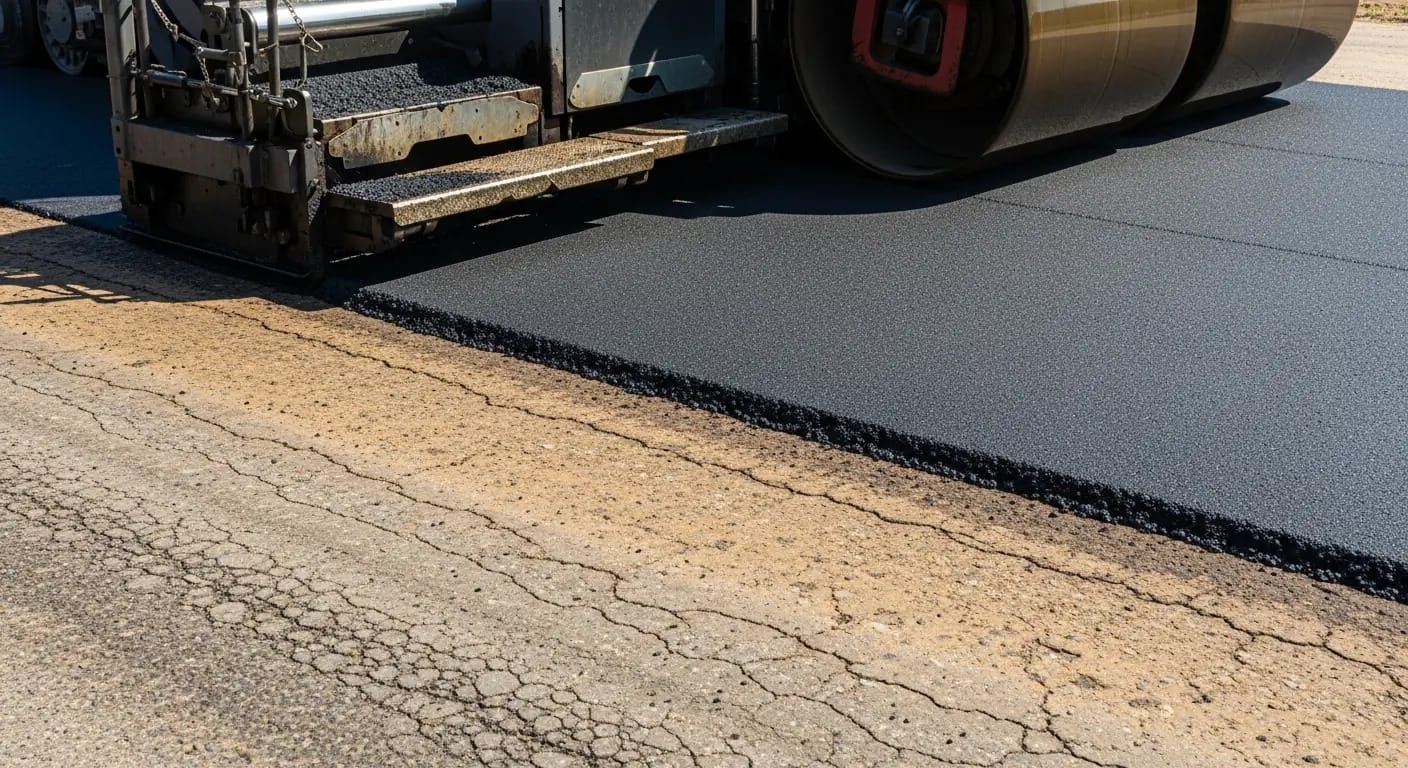
Refresh aging pavement with commercial asphalt resurfacing in Richmond, VA. We mill or level existing parking lots and apply a new asphalt overlay to restore a smooth, clean surface. Resurfacing is a cost effective option for lots with a solid base that need improved appearance, ride quality, and drainage performance.
Precision Asphalt Richmond provides professional commercial asphalt resurfacing throughout Richmond, VA, Virginia and the surrounding area. Our licensed, insured crew delivers safe, clean, on-time work with a free estimate before anything begins. Call (804) 409-4124 or request your free quote.
Commercial Asphalt Resurfacing for Richmond Properties
If you manage a commercial property in Richmond and your pavement is cracked, rough, or holding water, commercial asphalt resurfacing is often the most cost-effective way to bring it back without paying for a full tear-out. Precision Asphalt Richmond focuses on resurfacing and asphalt overlays for shopping centers, office parks, warehouses, industrial yards, and HOAs across the Richmond, Virginia area.
Resurfacing means we keep your existing base layer, fix the structural problems on top, and install a new asphalt surface course over it. This works well when the base is still solid but the top layer is oxidized, rutted, or patched too many times. A full replacement is only needed when the base has failed. Our first job on any project is to figure out which situation you have, so you do not overspend or under-fix the problem.
In central Virginia, the freeze-thaw cycles, summer heat, and frequent rain are rough on asphalt. Fine surface cracks turn into alligator cracking, potholes, and depressions that collect water. Resurfacing with a properly bonded overlay seals out that water, adds structural strength, and gives you a fresh, smooth driving surface that improves safety and appearance for customers and tenants.
Because we focus on commercial work in the Richmond market, we plan projects around business hours, tenant access, and local weather patterns. For most properties that means phasing the work by section, scheduling milling and paving early in the day to beat the afternoon storms, and reopening areas as quickly as the asphalt cools and can safely handle traffic.
How Commercial Asphalt Resurfacing & Overlays Are Done
A successful commercial asphalt resurfacing job is all about preparation and details. Precision Asphalt Richmond follows a clear, step-by-step process so you know what is happening on your property and why.
1. Evaluation and core testing. We start by walking the site, mapping out distress areas, and, when needed, taking core samples to check the depth and condition of your existing asphalt and stone base. If we find deep base failures or pumping subgrade, we note those zones for localized replacement instead of simple overlay.
2. Drainage and grade review. Resurfacing adds thickness to your pavement, which can change how water flows. Before we bring in a single truck, we look at where water currently sits and where it needs to go. We may recommend milling deeper along curb lines, reworking some stone, or cutting new swales so the overlay does not create new ponding that will shorten the life of your pavement.
3. Milling and edge preparation. On most commercial overlays we mill the surface, usually 1 to 2 inches, to remove ruts and old surface, tie into existing gutters, and keep elevations correct at building entrances, ADA ramps, and dock areas. We also cut clean edges at seams where new asphalt will meet existing surfaces so the finished transition is smooth and does not create a trip or plow edge.
4. Full-depth repairs and patching. Before any new asphalt is placed, we dig out failed sections that have alligator cracking or repeated potholes and rebuild them from the base up. That typically means undercutting soft spots, compacting new stone, then installing and compacting fresh asphalt in lifts. Skipping this step is why some overlays fail early.
5. Tack coat application. We apply an asphalt emulsion tack coat over the milled or cleaned surface. This creates a strong bond between the old pavement and the new overlay. Without a good tack coat, overlays can slip, separate, or ravel, especially under heavy turning movements from trucks.
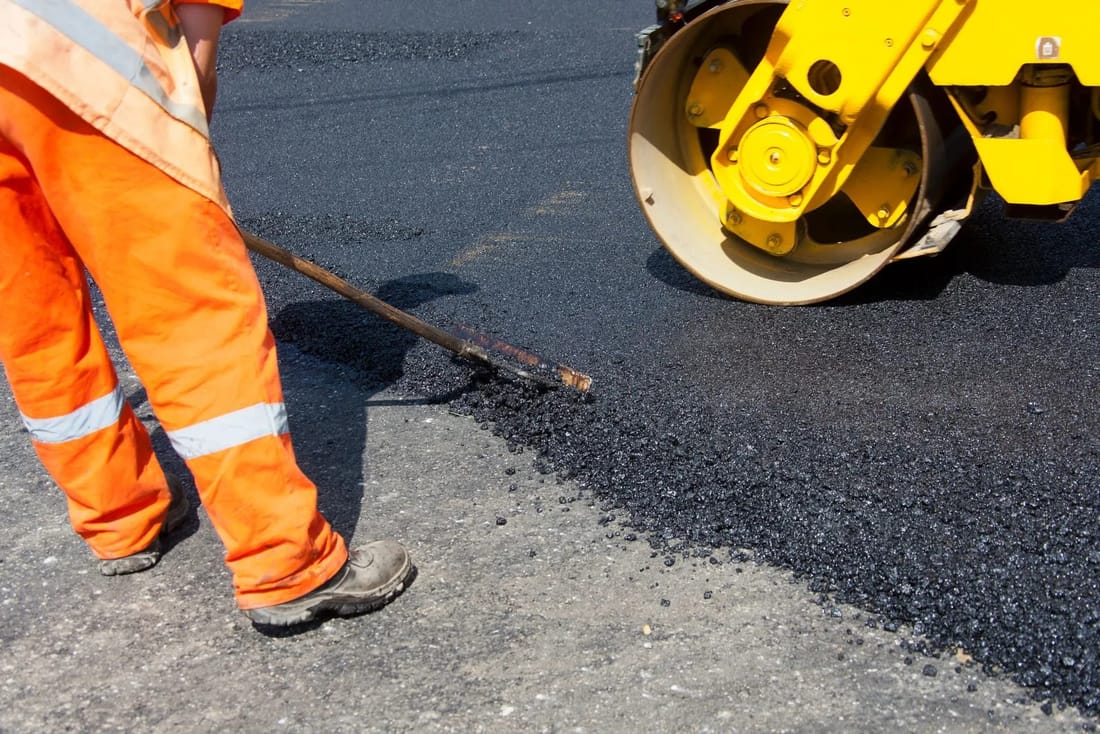
6. Paving and compaction. We install the new surface course using commercial-grade hot mix asphalt from local Richmond plants, typically 1.5 to 2 inches thick for car traffic and more for truck lanes. Our crews use pavers for consistent mat thickness and then steel-drum and pneumatic rollers to achieve target compaction. Proper compaction is what gives your overlay density and longevity.
7. Joints and finishing details. We treat longitudinal and transverse joints carefully so they do not become weak lines that crack early. After paving, we address details such as utility adjustments, curb transitions, and tie-ins at neighboring properties.
8. Striping and re-opening. Once the asphalt cools and hardens, we re-stripe parking stalls, ADA spaces, fire lanes, and directional markings based on your current layout or an updated plan. In many cases a lot can be milled, paved, and re-opened within 24 hours, with phasing to keep some parking available at all times.
Material Options and Design Choices for Overlays
Commercial asphalt resurfacing is not one-size-fits-all, especially in a city like Richmond where a small office lot, a hospital loop road, and a distribution yard all see very different traffic. Precision Asphalt Richmond helps you match the overlay design to the way your pavement is actually used so you do not overbuild light-duty areas or underbuild heavy-traffic lanes.
Mix type and thickness. For most standard parking areas with car and light truck traffic, a 1.5 to 2 inch surface course using a Virginia Department of Transportation style mix is typical. For loading docks, dumpster pads, and drive lanes that see repeated turning from box trucks and semis, we usually recommend thicker overlays or multiple lifts, sometimes with a heavier duty base mix under the surface course.
Reinforced overlays. In areas where reflective cracking from underlying joints or utility trenches is a concern, we can install a reinforcement fabric or grid between the old pavement and new asphalt. This adds cost but can significantly delay reflective cracking along known weak lines, which is worth considering in older industrial sites or long access roads.
Slopes and drainage improvements. Resurfacing is often the best time to correct drainage that has never really worked right. By adjusting milling depths and overlay thickness, we can improve slopes toward inlets, cut down high spots that block flow, and raise or lower certain areas so water stops pooling in front of entrances or at mid-lot depressions.
Surface texture and ride quality. Some retail and medical sites want a very smooth ride for carts and wheelchairs. Others, such as steep access drives, benefit from a slightly coarser surface for better grip in rain and winter conditions. We can adjust mix gradation within local standards to match those needs.
Markings and layout. Since the lot will be freshly black, this is also the time to rethink your striping layout. We can help you add or reconfigure ADA spaces, improve traffic flow with better arrows and stop bars, and update fire lane markings to current local codes. A resurfacing project that also fixes confusing traffic patterns usually gets the best feedback from tenants and visitors.
What Drives the Cost of Commercial Asphalt Resurfacing
Property managers often ask why two parking lots of similar size can have very different resurfacing prices. Precision Asphalt Richmond is transparent about what really drives the cost so you can make informed decisions and compare quotes fairly.
Existing pavement condition. If your lot has mostly surface cracking and light raveling, a standard mill and overlay is straightforward. If there are widespread base failures, deep potholes, or drainage problems, the job will require more full-depth patching and stone work before the overlay goes down. Those repairs add labor, time, and materials but are essential if you want the overlay to last.
Project access and phasing. Lots that can be closed completely for a day or two are more efficient to pave. Sites that must remain partially open, such as medical offices, grocery stores, or multi-tenant retail, require phasing, extra traffic control, and careful coordination with tenants. That extra planning and staging affects cost, although it is often necessary to keep your operations running.
Thickness and mix type. More asphalt and heavier duty mixes cost more, but in Richmond it is usually cheaper to build for the actual traffic than to deal with rutting and failures later. Warehouse truck courts, bus loops, and emergency routes often need thicker sections than general parking.
Site layout and obstructions. Wide open lots with simple layouts are faster to mill and pave. Properties with tight islands, many small parking bays, numerous utility structures, and steep grades take more time and specialized equipment. Working carefully around gates, docks, and drainage structures is slower but prevents later issues.
Timing and season. In central Virginia, the main paving season runs from roughly March through November, with the best conditions in late spring and early fall when temperatures are moderate. Night work or off-hour work can add cost, but for some commercial sites it is the best way to reduce business disruption. Trying to force marginal work in very cold conditions is rarely a good idea, so we schedule larger overlays during appropriate weather to protect your investment.
Regulatory and accessibility upgrades. Sometimes a resurfacing project triggers ADA or fire lane updates. Adjusting slopes near accessible ramps, updating striping and signage, and adding or modifying access aisles are important details that can add to the scope.
Local Issues, Common Problems, and How We Plan Your Project
Richmond’s climate is tough on asphalt. We see hot, humid summers, cold snaps in winter, and frequent rain most of the year. Those swings expand and contract your pavement, especially where water has found a way in. Precision Asphalt Richmond plans commercial asphalt resurfacing projects around those realities so you get a longer service life from your overlay.
Freeze-thaw and drainage. Even though Richmond is not the coldest part of Virginia, we still get enough freeze-thaw cycles each year to break apart wet pavement. That is why we put so much emphasis on fixing low spots, cleaning out clogged inlets, and getting the slopes right before we overlay. A good overlay without good drainage will not last, especially on shaded areas that stay damp longer.
Underlying utility trenches and patches. Many commercial sites in Richmond have been cut repeatedly for telecom, water, or sewer work. Those trenches can settle differently than the surrounding pavement and often crack first. We identify those areas, compact them properly, and sometimes use fabric or heavier mixes over them so the overlay does not fail in those same lines.
Oxidation and raveling. Older asphalt in this area often turns gray and starts losing fines on the surface. That is a sign the binder is oxidizing and the surface is drying out. Resurfacing before deep structural damage sets in is usually cheaper than waiting until you have widespread alligator cracking and base failures. Part of our job is to tell you honestly whether it is time to overlay or if sealcoating and crack fill are enough for a few more years.
Traffic control and communication. On commercial jobs we lay out very specific traffic plans so tenants and staff know what to expect. That can include phasing maps, temporary signage, and coordinated start times. For example, a retail center on West Broad might have the rear truck court done early, then front customer parking in sections on lower traffic days so stores remain accessible.
What you should know before hiring. When you compare bids for commercial asphalt resurfacing in Richmond, ask each contractor how thick the overlay will be, what milling depth they are including, how many square yards of full-depth repair they have assumed, and how they will manage drainage and traffic control. If those details are not clear, you may be looking at a low number that leads to change orders or a short-lived overlay. Precision Asphalt Richmond provides written scopes that spell out these points so you can line up proposals fairly and know exactly what you are getting.