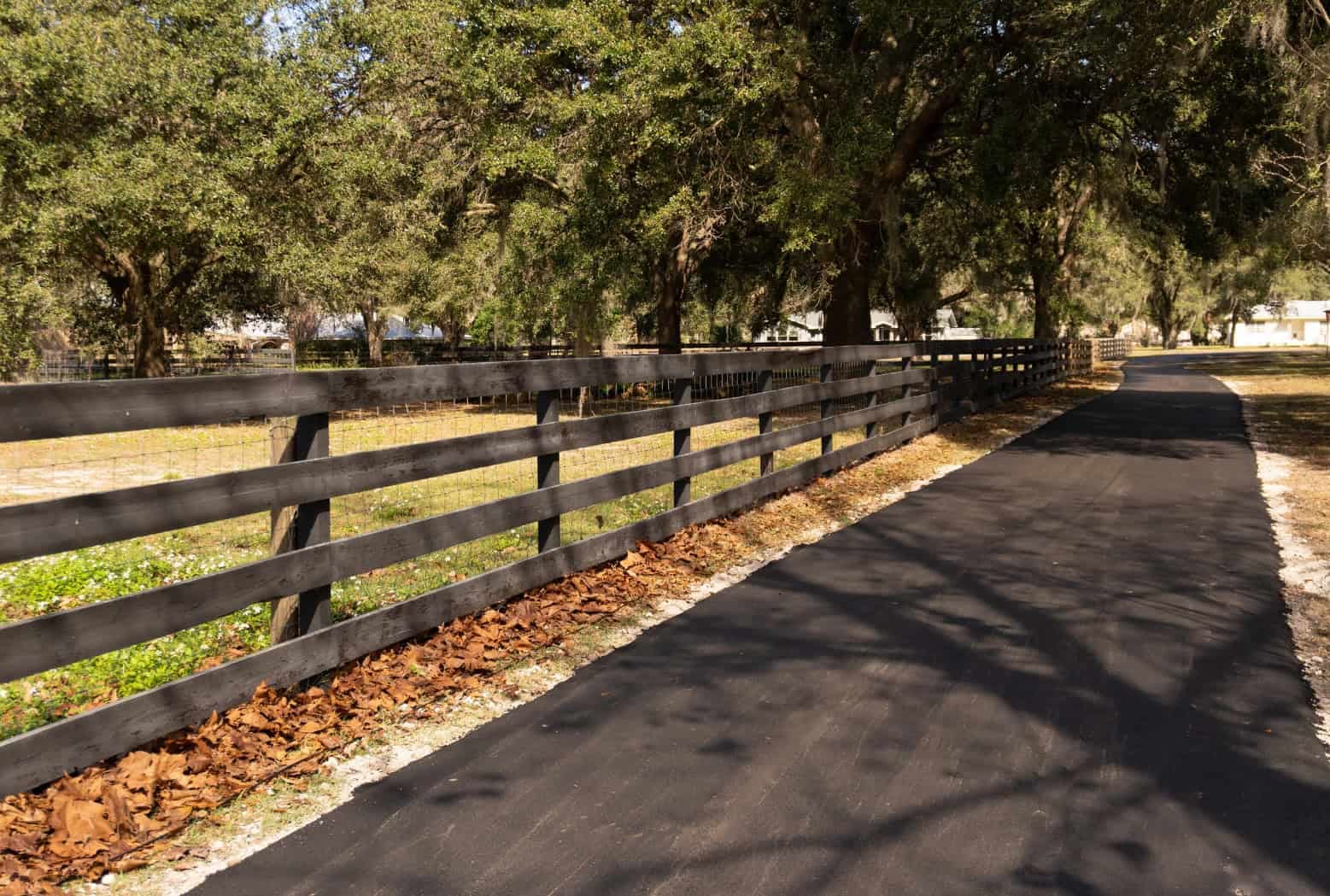
Home › Private Road and Lane Paving
Upgrade gravel or worn pavement with private road paving in Richmond, VA. We build and resurface shared driveways, lanes, and access roads for smooth, dust free travel. Our team designs proper drainage, compaction, and thickness so your private asphalt road holds up to daily traffic and changing weather.
Precision Asphalt Richmond provides professional private road paving throughout Richmond, VA, Virginia and the surrounding area. Our licensed, insured crew delivers safe, clean, on-time work with a free estimate before anything begins. Call (804) 409-4124 or request your free quote.
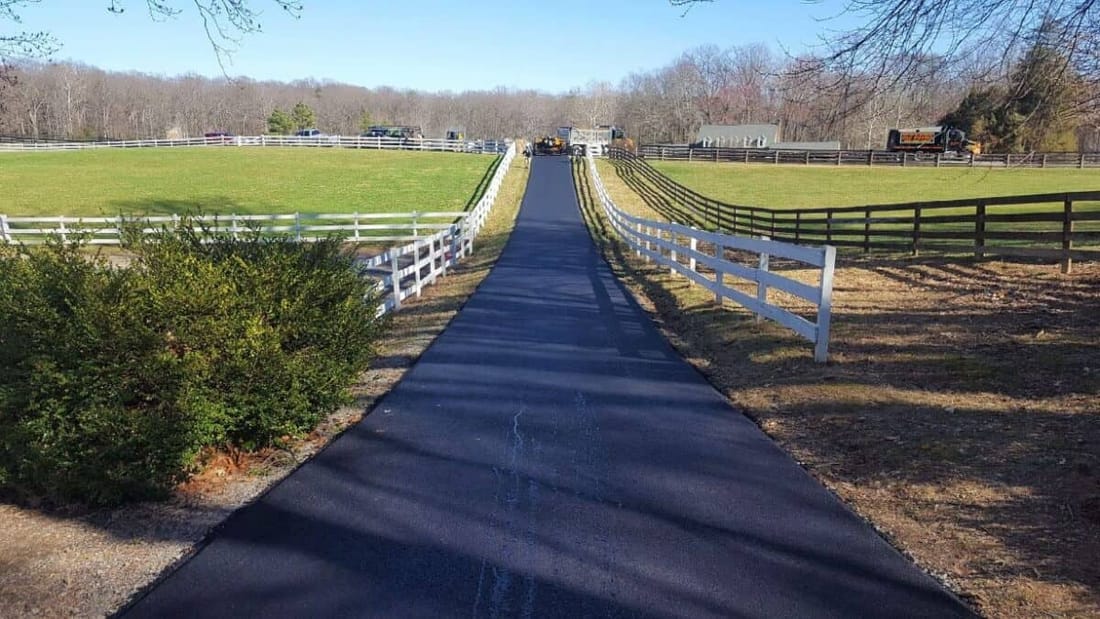
Private Road Paving for Homes, Farms, and Small Communities in Richmond
If you share a driveway with neighbors, manage a small subdivision, or maintain a long lane back to your home or farm, a well built private road is essential. Precision Asphalt Richmond focuses on private road paving in and around Richmond, VA, so we understand the mix of clay soils, seasonal flooding, and heavy temperature swings that can quickly break down a poorly built lane.
We work with rural property owners, HOAs, small business parks, and churches who need dependable access but do not want a highway style project. Our goal is to give you a private road that drains properly, stands up to delivery trucks and service vehicles, and still looks clean and welcoming at your entrance.
From gravel farm lanes in Varina that need to be converted to asphalt, to winding subdivision roads in Short Pump that need resurfacing without shutting everything down, we plan each project based on how your road is actually used, not just its length and width.
How We Design a Private Road or Lane That Fits Your Property
Private roads are not one size fits all. When you contact Precision Asphalt Richmond, we start with a site visit instead of a quick phone quote. During that visit we walk the full length of the road, look for soft spots, check existing drainage ditches and culverts, and note things like hills, sharp curves, and low shaded areas that may stay wet or icy.
Design decisions we review with you include:
• Intended traffic: light residential traffic, moving trucks a few times a year, or daily use by heavy work trucks and equipment.
• Base needs: whether your current gravel base is deep and stable enough or if sections need undercutting and replacement because of Richmond’s clay soils.
• Width and layout: room for two vehicles to pass, pull offs on long single lane drives, and how tight curves will affect turning and pavement stress.
• Drainage plan: ditch depth, culvert sizes at entrances, and whether we need to crown the road surface more aggressively in areas that collect water.
For many Richmond properties, a simple crowned road with shallow ditches on either side and a solid aggregate base is enough. For steeper drives in areas like the western Henrico line, we may recommend slightly thicker asphalt and additional cross drains to handle stormwater from intense summer thunderstorms.
Our Private Road Paving Process, Step by Step
Once you approve the plan and estimate, Precision Asphalt Richmond schedules the work in a way that keeps access to your property as open as possible. A typical private road paving project involves several clear steps.
1. Clearing and rough grading: We remove brush close to the new road edges, strip topsoil and organics, and use grading equipment to shape the roadbed. This is where we establish the crown (a slight high point in the center) and the slope toward ditches or swales.
2. Subgrade stabilization: Soft, pumping areas are a big issue in Richmond because of clay and poor historic drainage. In those spots we may undercut, which means digging out the weak soil, then replacing it with compactable stone and sometimes geotextile fabric to prevent future sinking.
3. Aggregate base installation: We typically use a VDOT spec stone mix that compacts tightly. For light residential private roads we may install 4 to 6 inches of compacted stone. For heavier traffic, or where garbage trucks and delivery vehicles turn and brake often, we increase that thickness.
4. Fine grading and compaction: After the stone base is placed, we shape it to the final profile of the road, then compact it with a vibratory roller. We check for ponding by lightly wetting the surface and making sure water sheds to the sides.
5. Asphalt paving: We apply a tack coat where we meet existing pavement, then lay hot mix asphalt using a paver for consistent depth. In tight or curved areas, we may hand place and then roll for better fit. Residential private roads often receive a 2 to 3 inch surface course. Heavier use roads may get a base course plus a surface course for added strength.
6. Rolling and compaction: Steel and pneumatic rollers compact the asphalt to lock the aggregate together. We pay extra attention to transition points near garages, parking pads, and public roads so you do not feel a bump when you drive.
7. Final touches: We tie in gravel shoulders where needed, clean up edges, and, if requested, add speed humps, basic striping, or simple signage like private road markers.
Material Options for Private Roads in the Richmond Climate
For most private roads and lanes in Richmond, we recommend a dense graded hot mix asphalt similar to what you see on secondary roads, scaled to the traffic your road receives. It handles our freeze thaw cycles better than cheaper alternatives and can flex slightly with clay soil movement.
Common options we discuss with private road customers include:
• Single lift asphalt: One thicker layer of asphalt, often 2.5 to 3 inches, for light residential use where cost control is important.
• Two lift system: A stronger base course followed by a finer surface course. This is smart for shared subdivision roads, farm drives with equipment traffic, or any road that regularly sees propane, trash, or delivery trucks.
• Overlay on existing pavement: If your current asphalt is mostly sound but rough or cracked, we can mill high spots, patch structural failures, then overlay with new asphalt. This keeps costs down but still refreshes the surface.
We also talk about shoulder materials. On many private roads it makes sense to use compacted gravel shoulders next to the asphalt edge. This supports the pavement so it does not break off when vehicles occasionally drive near the edge, and it provides a place for drainage without expensive curb and gutter.
For long, shaded lanes, we sometimes recommend slightly higher asphalt content mixes to help resist moisture damage and raveling, which can be an issue where sunlight does not regularly dry the surface.
Permits, HOAs, and Access Issues for Private Road Paving in Richmond
Private road projects in the Richmond area usually involve at least one of three factors: HOA review, tie in to a VDOT maintained road, or stormwater considerations. Precision Asphalt Richmond has experience coordinating each of these so your project does not stall.
HOAs: If your road or lane is in a planned community, the HOA may have requirements for road width, appearance, and even mailbox placement. We can provide drawings, material descriptions, and insurance documentation to your HOA board so they can approve the work quickly.
Tie ins to public roads: When a private road connects directly to a VDOT or city maintained street, it is important to match elevations and follow any entrance standards. In some cases, especially for new entrances or major changes, you may need an entrance permit or review. We help identify whether that applies and coordinate with your engineer or the locality when necessary.
Stormwater: For most small private road resurfacing projects, formal stormwater permits are not required. However, when we are building a new lane or significantly regrading ditches, we design the work so water is directed to stable outlets instead of neighboring yards or streams. In low areas near creeks, we may suggest larger or additional culverts so that strong storms do not wash out your only access route.
Access planning: We discuss with you in advance how residents, farm operations, or small businesses will get in and out during paving. Many private road projects can be done in sections so there is always at least one lane open, or we schedule work in shorter windows so the asphalt can cool and open to traffic the same day.
What Affects the Cost of Private Road Paving in Richmond
No two private roads cost the same per foot, even if they are nearby. Precision Asphalt Richmond builds estimates that are transparent so you can see where your money is going and where we might be able to adjust to fit your budget.
Major cost drivers include:
• Length and width: Obvious factors, but we also look at whether wider passing zones are needed in only a few locations instead of the full length.
• Base condition: If your existing gravel base is deep, well drained, and already compacted from years of use, you save money because we do less excavation and stone replacement.
• Drainage work: Installing new ditches, swales, or culverts adds cost but often prevents expensive repairs later. Roads in flatter, low lying parts of Richmond often need more drainage work than those on higher ground.
• Asphalt thickness and number of lifts: More asphalt means higher cost but also more structural strength. For a lane that sees only cars and pickups, we may not need the same build as a shared road used by heavy trucks.
• Site access: Tight entrances, overhead trees that require trimming, or limited space for trucks and equipment can affect production speed and labor.
We are up front about optional items that improve long term performance, such as thicker base stone or an additional asphalt lift, so you can decide what matches your priorities. If desired, we can also break the project into phases, for example building and paving the first half of a long lane this year and the rest the following season.
Maintenance, Repairs, and How to Get Started
A well built private road in Richmond can last many years if you protect it from standing water and do small repairs before they grow. After your road is paved, Precision Asphalt Richmond will explain specific maintenance steps for your site.
Basic tips include keeping ditches clear so water can move away, watching for early edge cracking where vehicles frequently drop a wheel off the pavement, and calling us when you notice new depressions or potholes forming. Sealcoating can be helpful in some situations, especially for lighter use residential lanes, but it is not a cure for structural issues. We will give you honest guidance about what your road does or does not need.
We also provide repair and resurfacing services for older private roads. This can include patching failed sections, milling and replacing steep or rutted areas, or placing a leveling course before a final overlay so the road drains properly again.
To get started, contact Precision Asphalt Richmond and we will schedule a site visit, usually within a few business days. We will walk the road with you, discuss how you use it now and what may change in the future, then provide a clear written proposal. Our goal is simple: a private road or lane that gives you reliable, safe access to your home, farm, or community entrance for years to come.