Home › Walkway and Pathway Paving
Create smooth, safe access around your home with asphalt walkway paving in Richmond, VA. We design and pave paths to entrances, sheds, garages, and backyard spaces for easy year round use. Our asphalt walkways offer a clean look, good drainage, and a comfortable walking surface that ties into your existing drive or patio.
Precision Asphalt Richmond provides professional asphalt walkway paving throughout Richmond, VA, Virginia and the surrounding area. Our licensed, insured crew delivers safe, clean, on-time work with a free estimate before anything begins. Call (804) 409-4124 or request your free quote.
Asphalt Walkway Paving for Richmond Homes, Businesses, and Communities
Safe, smooth walkways are one of the simplest ways to make a property feel cared for and easy to use. At Precision Asphalt Richmond, we focus on asphalt walkway paving that fits how people actually move through your space, whether it is a front walk to your porch, a path along an apartment complex, or a network of trails in a neighborhood or HOA.
Our crews work across Richmond, from the Fan and Church Hill to Midlothian and Short Pump, so we understand the mix of older properties, sloped lots, and clay-heavy soils in this area. We design each walkway so it drains properly in our humid summers, stands up to tree roots, and handles winter freeze-thaw cycles without breaking apart.
Instead of offering one standard path layout, we walk the site with you, talk through how the walkway will be used, and suggest widths, layouts, and edges that match your goals. A residential walkway to a front door might be 3 to 4 feet wide, while a pathway used by strollers or two-way foot traffic may need 5 to 6 feet to feel comfortable.
How We Build Long-Lasting Asphalt Walkways in Richmond
Good walkway paving is more about what you do below the surface than the blacktop you see on top. Our process is structured around Richmond soil conditions and the way local weather affects pavement.
1. Site visit and layout: We start by marking the route, checking slopes with levels, and looking at where water naturally runs after a storm. We adjust the layout so the finished path has a gentle cross-slope that sheds water instead of letting it sit.
2. Excavation: For most walkways we excavate 6 to 10 inches below finished grade, deeper if the soil is soft or has organic material. In many Richmond yards we run into red clay or fill dirt. We remove unstable pockets to avoid future settlement or depressions.
3. Base installation: We install and compact a graded aggregate base, usually a crushed stone blend like 21A. For light-use residential walkways, 4 to 6 inches of base is common. For community paths, steeper slopes, or service access routes, we may install 6 to 8 inches. We compact in thin lifts with plate compactors or rollers until the base is firm and does not rut under foot.
4. Edge definition: Depending on the design, we set concrete, brick, or metal edging along the route. Edging helps keep the asphalt edge from crumbling and gives a clean border between the path and lawns or planting beds.
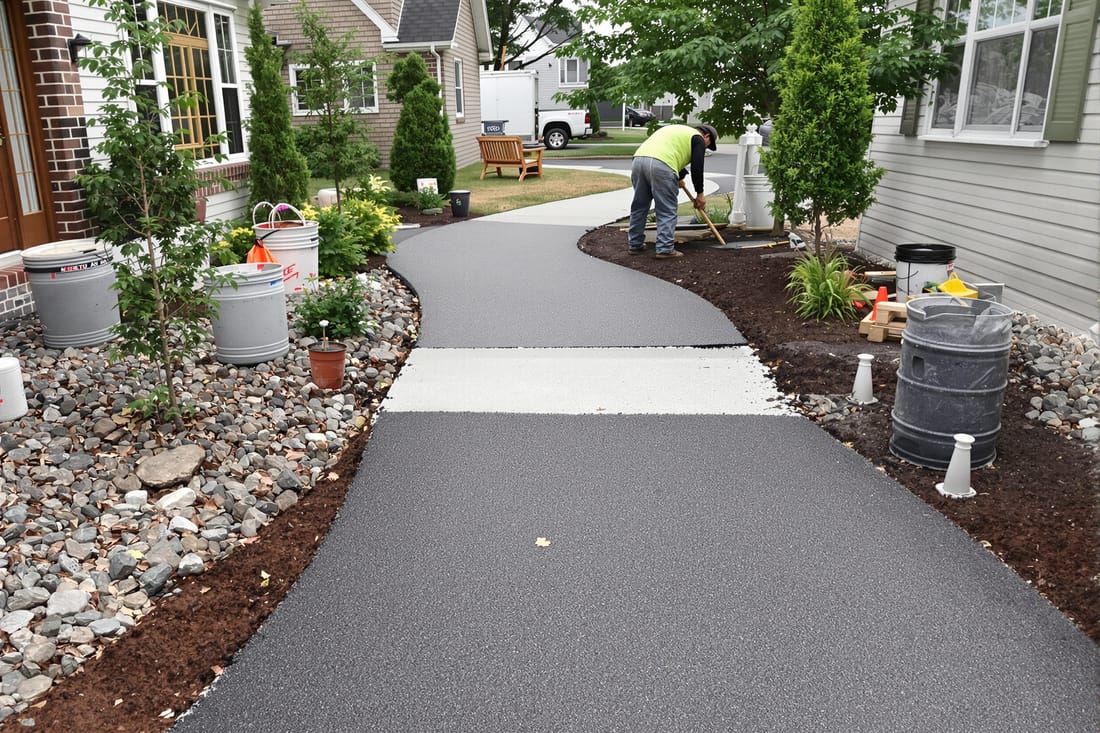
5. Asphalt placement: We typically install 2 to 3 inches of hot mix asphalt in one or two lifts, depending on the use and access for equipment. On tighter sites we may hand-place asphalt, then compact it with a smaller roller to get a smooth finish even around curves.
6. Final compaction and detail work: After rolling, we check transitions at steps, sidewalks, and driveways to avoid trip hazards. We also shape shoulders along the edges with topsoil so you can mow up to the path without a sharp drop.
Design Options for Walkways and Pathways
Asphalt walkways do not have to look plain. Precision Asphalt Richmond offers design choices so your path fits the look of your home or commercial property.
Width and alignment: For single-person residential paths, we often recommend 3 to 4 feet. For shared community paths, school grounds, or park walkways, 6 feet or more improves comfort and safety. Curved layouts can help avoid large trees, utilities, or steep grades, and they usually look more natural in landscaped yards.
Surface texture: We can finish asphalt with a smoother or slightly more textured surface, depending on the intended use. A smoother finish is easier for wheelchairs and walkers. A slightly textured finish can improve traction on mild slopes or in shaded, damp areas.
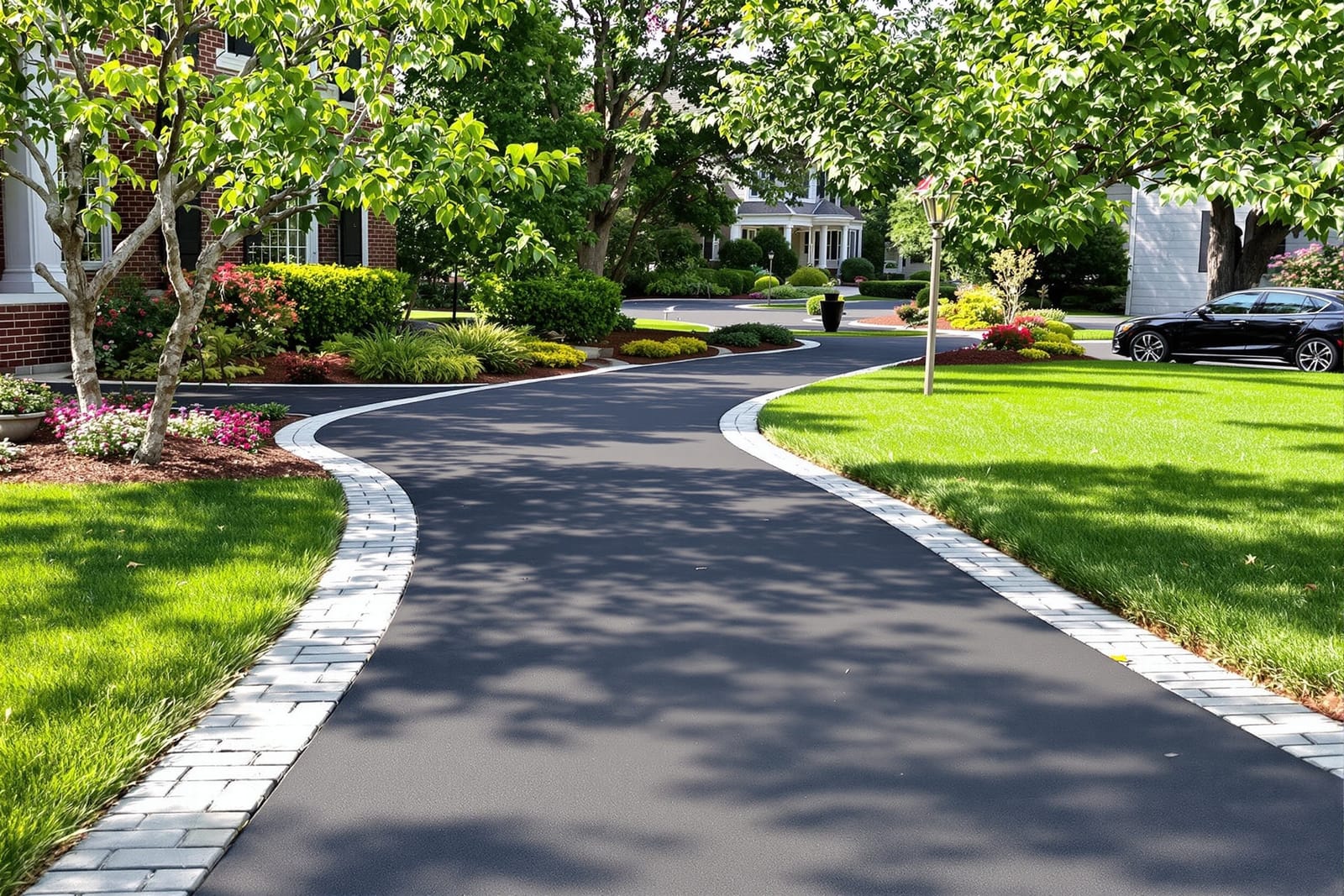
Borders and accents: Popular options include concrete bands at entries, brick or stone paver borders, and decorative scoring at key transitions like front steps or patio entries. These details visually break up the asphalt and help connect the path to existing patios, porches, or driveways.
Drainage features: Where a walkway crosses a low area or connects to a downspout discharge, we can incorporate small swales, underdrains, or concrete cross gutters so water moves away without undermining the path.
Lighting and accessibility: We coordinate grades with existing porches, ramps, and door thresholds so transitions are smooth and ADA friendly where needed. We can also work with your electrician or landscaper to leave sleeves under the path for future low-voltage lighting or irrigation lines.
What Drives the Cost of Asphalt Walkway Paving
Pricing for asphalt walkway paving in Richmond depends on more than just square footage. Understanding the main cost drivers helps you compare estimates fairly.
Length, width, and thickness: More area means more excavation, stone, and asphalt. A narrow 3 foot garden path costs less per foot than a 6 foot shared-use path with thick base and asphalt. Increasing asphalt thickness from 2 inches to 3 inches adds material cost but can extend life, especially for HOA and commercial paths.
Site access and preparation: Tight rear yards that require hauling material by wheelbarrow or mini equipment instead of trucks and large loaders take more labor. Removing old concrete or brick, cutting tree roots, stripping sod, or regrading steep slopes can all add to preparation cost.
Base requirements: Soft or wet soil, common near creeks and low spots in Richmond, often requires thicker stone base or underdrain systems. This adds both material and labor but is critical for long-term performance.
Edging and finishes: Concrete or paver borders, decorative transitions, and complex curves take more time than a straight asphalt strip. While these features add cost, they also protect the asphalt edge and improve curb appeal.
Logistics and timing: Combining several walkways or adding a driveway patch at the same visit can reduce cost per square foot because we spread mobilization and equipment costs across more work. We often help homeowners and HOAs plan projects this way to stay within budget.
Common Walkway Problems in Richmond and How We Prevent Them
Richmond’s climate and soils create specific challenges for walkways and pathways. At Precision Asphalt Richmond we design and build with these issues in mind so you are not calling for repairs every couple of years.
Standing water and algae: Shaded paths, especially on the north side of buildings or under trees, can stay damp and grow slippery algae. We set proper cross-slope, typically around 2 percent, and correct low spots in the base so water drains off quickly. In problem areas we may recommend trimming back vegetation or adding a slight regrade to channel water away.
Tree root heaving: Large oaks, maples, and sweetgums are common in older Richmond neighborhoods. Their roots can lift walkways and create trip hazards. Where possible, we adjust the alignment around major roots, use root barriers, or increase base thickness to bridge over minor roots. We also discuss with you and, if necessary, an arborist before cutting any significant roots.
Cracking from freeze-thaw: Winter in central Virginia brings cycles of freezing and thawing that can break apart poorly built paths. Our approach is to use a well-compacted, well-drained stone base and avoid trapping water under the asphalt. Proper drainage is the best defense against freeze-thaw damage.
Edge raveling: Without support, walkway edges can crumble as soil erodes or lawns are mowed. We minimize this by installing stable borders or at least compacted shoulders, then recommending that you maintain a slight soil slope away from the path instead of leaving a trench along the edge.
Best Times of Year to Schedule Walkway Paving in Richmond
Temperature and moisture affect how well asphalt compacts and cures. In Richmond we plan most walkway and pathway paving from late spring through early fall, but there are good reasons to choose specific windows.
Late spring and early summer: This is often the ideal time. Ground moisture has usually dropped from winter, temperatures are consistently warm enough for good compaction, and we can avoid the extreme heat that makes working in tight residential areas uncomfortable.
Mid to late summer: We can still pave successfully, but we pay extra attention to timing during the day. In very hot weather we may schedule walkway work earlier in the morning so asphalt does not cool too quickly on shaded sites and so fresh pavement is not scuffed by afternoon foot traffic.
Fall: Early fall can be an excellent time, especially for HOA paths and school walkways. Temperatures are mild and asphalt still compacts well. As nights get cooler, we adjust mix selection and layer thickness so compaction is complete before the material cools.
Winter: For most residential and light-use walkways we recommend waiting unless there is an urgent safety issue. Cold temperatures and saturated ground increase the risk of poor compaction and shortened pavement life. If winter work is unavoidable, we discuss the added precautions and potential limitations with you in detail.
What to Expect When You Hire Precision Asphalt Richmond
We try to make walkway and pathway projects straightforward for homeowners, property managers, and HOAs by setting clear expectations from the start.
Planning and proposal: After a site visit, you receive a written proposal that describes the walkway route, base and asphalt thickness, edging type, drainage improvements, and any tie-ins to existing concrete or asphalt. We explain which items are optional so you can prioritize within your budget.
Scheduling and preparation: Before work begins we review where equipment will access the site, which areas need to be cleared, and any temporary parking or pedestrian detours. We coordinate with you to avoid trash pickup days, school bus times, or heavy customer traffic where possible.
Construction: Most single walkways are completed in one to two days, weather permitting. Larger community path projects may take several days. Our crew keeps the work area as tidy as possible, protects nearby landscaping where we can, and communicates when access points will be briefly blocked.
Aftercare and maintenance: We typically recommend keeping foot traffic off new asphalt for 24 hours and avoiding heavy loads such as moving trucks or dumpsters on paths not designed for vehicles. Routine care is simple: keep edges supported with soil or mulch, clear leaves so moisture does not sit, and address any drainage issues you notice early. If cracks appear years down the road, sealing them promptly can prevent water from damaging the base.
Because we live and work in the Richmond area, our reputation depends on walkways that hold up over time. When you call Precision Asphalt Richmond, you get a local crew that will be here to answer questions long after the rollers leave your property.