Home › Parking Lot Paving & Installation
Outfit your business with professional asphalt parking lot paving in Richmond, VA. We design and build new lots with proper base, grading, and striping for safe, efficient traffic flow. From small retail lots to large commercial layouts, our team delivers smooth, durable blacktop that presents a strong first impression to customers and tenants.
Precision Asphalt Richmond provides professional asphalt parking lot paving throughout Richmond, VA, Virginia and the surrounding area. Our licensed, insured crew delivers safe, clean, on-time work with a free estimate before anything begins. Call (804) 409-4124 or request your free quote.
Asphalt Parking Lot Paving in Richmond, VA
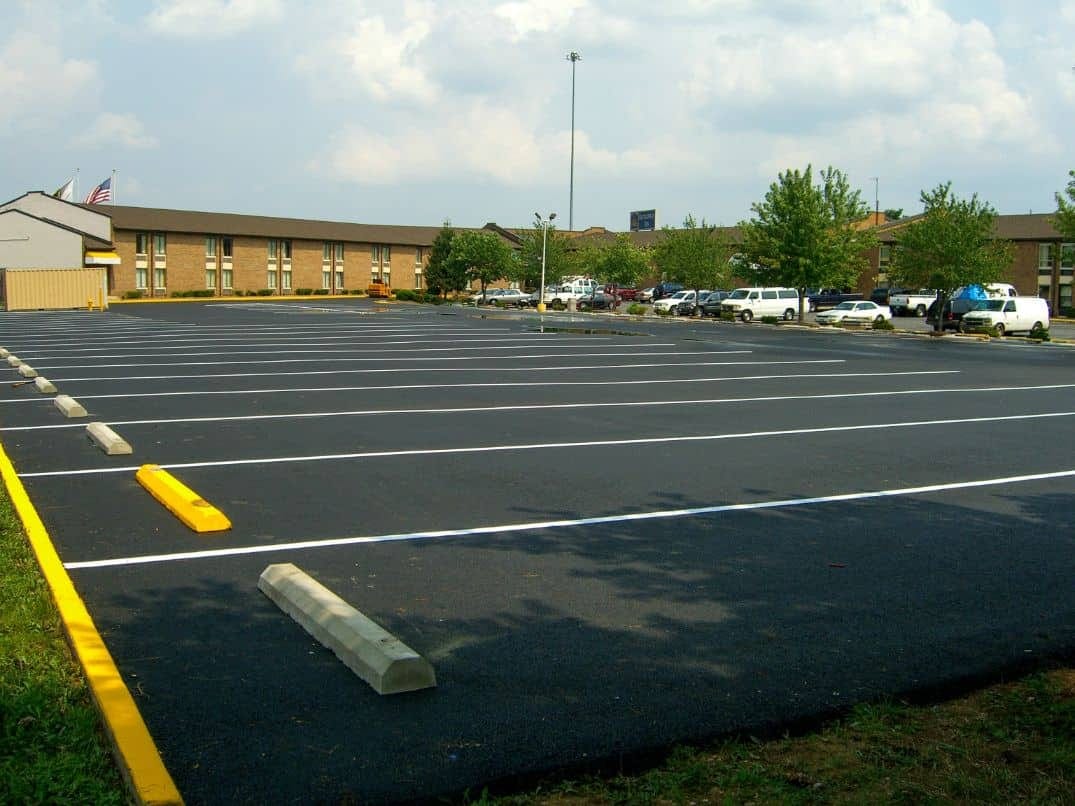
A well built parking lot tells your customers and tenants that you care about safety, organization, and appearance. At Precision Asphalt Richmond, we focus on asphalt parking lot paving for businesses, churches, medical offices, apartments, and HOAs throughout the Richmond, VA area, including Henrico, Chesterfield, and Hanover.
Our approach is straightforward. We listen to how your parking lot will actually be used, look at your existing surface and drainage, then design an asphalt section that can handle the daily traffic you expect. We pay close attention to Virginia weather patterns, especially freeze thaw cycles and summer heat, which heavily influence how your asphalt should be installed.
Whether you are building a new lot on an undeveloped site or replacing a failing one full of potholes and standing water, our crews handle the entire process from subgrade prep to final striping. You get one accountable team instead of juggling multiple contractors.
How We Install a Long Lasting Asphalt Parking Lot
A durable parking lot in Richmond starts below the blacktop. First, our team evaluates and prepares the subgrade. We remove unsuitable soils, old broken pavement, roots, and organic material. Soft areas are undercut and replaced with compacted stone so that the base does not shift when trucks turn or when our clay soils get saturated after heavy summer storms.
Next, we install and compact a stone aggregate base, typically 21A or 21B, to a depth that matches the load your lot must handle. For light duty office or retail parking, base thickness may be 4 to 6 inches. For delivery lanes, dumpster pads, or bus traffic, we increase that to 8 inches or more. Each lift of stone is compacted using vibratory rollers to meet density requirements, because gaps in the base will eventually become potholes.
Once the base is checked for grade and tight compaction, we place the asphalt. Surface designs often use a two course system: a thicker base or binder course that provides structure, followed by a finer surface course that gives a smooth, attractive finish. We heat and deliver the asphalt mix from local Richmond plants, then lay it with a paver in controlled passes so the mat stays within the proper temperature range. Rollers follow immediately to compact the asphalt before it cools.
We continuously check slopes with laser levels and string lines during paving so water sheds correctly. After compaction, we saw cut transitions at tie in points, like street connections or adjoining lots, to create a clean edge that will not ravel apart over time.
Planning Layout, Drainage, and Traffic Flow
For most Richmond property managers, the layout and drainage of the parking lot matter just as much as the asphalt itself. At Precision Asphalt Richmond, we start with a site visit where we note how vehicles will enter, exit, park, and turn, and where pedestrians are most likely to walk.
We help you choose stall widths, angles, and drive lane widths based on use. For example, medical offices and grocery plazas often benefit from 90 degree parking with wider aisles to handle frequent pull in and backup movements, while some small offices choose angled stalls for easier one way traffic. We also plan for accessible parking spaces, curb ramps, and crosswalks that meet ADA guidelines and Virginia code.
Drainage is a frequent problem in the Richmond area because of clay soils and older lots that were built nearly flat. When designing or replacing a lot, we set minimum slopes (typically 1.5 to 2 percent where possible) and route water to inlets, swales, or existing storm structures. Where the existing grading is poor, we may recommend adding catch basins or adjusting curb lines so that water does not pond near entrances or freeze into sheets of ice in winter. Addressing these details during design is far less costly than chasing drainage issues later.
We also consider snow plowing, delivery truck paths, and dumpster access so that heavy vehicles are directed over stronger pavement sections, not fragile corners or unsupported edges.
Material Options and What Affects Cost
Most clients want to know early on what drives the cost of asphalt parking lot paving. In Richmond, the main factors are subgrade condition, total square footage, thickness of stone base and asphalt, number of tie in points, and drainage complexity.
If your existing lot has deep alligator cracking and rutting, that usually indicates base failure. In those cases, a simple overlay is not recommended because the cracks will reflect through the new asphalt within a short time. Full depth replacement, where we mill or excavate all the way down and rebuild the base and asphalt, costs more up front but lasts far longer.
For new construction, soils testing or at least a subgrade inspection helps us determine how much undercut and stone will be needed. Sites with soft, wet, or highly expansive clay will require more base rock and careful compaction. Flat sites that need added drainage structures or re grading also add to overall cost.
You will be able to choose between different asphalt mix designs and section thicknesses based on expected traffic. Light duty lots might use a 2 to 3 inch surface over a 4 to 6 inch stone base. Areas that will see trash trucks and frequent deliveries might need 3 inches of binder plus a 1.5 inch surface over 8 inches or more of base rock. We walk you through these options so you understand where every dollar is going and how each decision impacts life span.
We also discuss timing. Working nights or weekends to avoid customer disruption can be arranged, and while it may add some cost, it can prevent loss of business and reduce complaints during construction.
Common Richmond Parking Lot Issues and How We Prevent Them
Property owners in the Richmond region see a few recurring parking lot problems: rutting in wheel paths where delivery trucks stop, cracking at the edges of the asphalt where it meets grass or gravel, and standing water that shortens pavement life.
To prevent rutting in heavy traffic lanes, Precision Asphalt Richmond may thicken the asphalt section, specify a stiffer mix in those lanes, or recommend concrete pads in specific small areas like dumpster enclosures. We can also alter truck routes so they travel over the strongest parts of the lot.
Edge failures typically occur when asphalt is paved directly against unstable soils without adequate support. We prevent this by using proper stone shoulders, concrete curb and gutter, or saw cutting to sound base material before paving. This keeps the edges from crumbling when vehicles drive or park near the outside stalls.
Standing water is another common complaint. Ponds accelerate oxidation, allow water to penetrate joints, and in winter can freeze and expand, opening cracks. During our planning stage, we look for existing birdbaths and re shape the base to eliminate them. If the lot is already too flat, we might add structures like small inlets tied into your storm system so that water has somewhere to go.
For clients who have had repeated patching done by different contractors with poor results, we can core sample the existing pavement to see what is actually underneath. That information lets us recommend either a structured overlay with milling or a full reconstruction, rather than simply placing new asphalt over unknown problems.
What to Expect When You Hire Precision Asphalt Richmond
From the first conversation, our goal is to make your parking lot paving project predictable and low stress. We start with an on site evaluation in Richmond or the surrounding counties, where we measure the lot, check grades, look at nearby storm systems, and talk through how you want traffic and pedestrians to move.
Then we present a written proposal that breaks out key elements: subgrade prep, base stone depth, asphalt thickness, drainage work, and striping. If there are cost options, such as a lighter section for most of the lot and a heavier section for a loading area, we spell those out clearly. We can also coordinate with your engineer or architect if plans are already in place.
Before paving day, we work with you to set a schedule that minimizes disruption for tenants and customers. Some projects are staged so that half the lot remains open while we work on the other half, then we switch. On multi day projects, we post signage and barricades so people know where to park and which entrances will be temporarily closed.
After paving, we typically recommend keeping vehicles off the new asphalt for at least 24 hours, longer if temperatures are cool or if heavy trucks are involved. Striping and signage follow after the asphalt has cooled and hardened. We complete a final walkthrough to check drainage, transitions, and markings, and address any small touch ups before we leave.
You will receive guidance on maintenance intervals, including when to plan for crack sealing and sealcoating, so you can budget and schedule preventive care instead of waiting for expensive failures. By taking this long view, Precision Asphalt Richmond helps you get the maximum life and curb appeal from your new asphalt parking lot installation.